Check out some of my recent writing on ancient Africa

Carol M. Highsmith, Public domain, Library of Congress Prints and Photographs, https://lccn.loc.gov/2019690555
How Egyptologists removed ancient Egypt from Africa

October 2019
Video (5 minutes)
Museum of Fine Arts, Boston
Ancient Nubia Now exhibition
https://www.youtube.com/watch?v=dRL6EDWfqMs
Many of the early archaeologists came to the study of ancient Egypt and ancient Nubia from the perspective of Semitic languages or the study of the Hebrew Bible. It was very important to them to bring Egypt specifically into the sphere of biblical studies, so they had to carve Egypt away from Africa to bring it into that sphere. The way that they did that was they used race. These early archaeologists effectively (and incorrectly) made ancient Egypt “white,” in the sense that they made it part of a dominant Western culture, and ancient Nubia was separated from that. It was “Black.” This was how they took Egypt out of Africa and put it into a Semitic sphere, or biblical sphere.
W. E. B. Du Bois, Education, and Archaeology in Egypt

March 2017
Video (1 minute)
Harvard Museum of the Ancient Near East
Harvard University
https://www.youtube.com/watch?v=W5jkcqWfRg0
It is imperative that when we think of the history of Egyptology, we should also include with these individuals, scholars like W. E. B. Du Bois, who challenged the dominant discourse of their day and who provided correctives to erroneous views that Egyptologists held. Scholars like Du Bois fought back against claims that the history of Egypt was not a part of African history, but was a part of white history.
W. E. B. Du Bois, Education, and Archaeology in Egypt: An Overlooked Chapter in the History of Egyptology
March 2017
Video (51 minutes)
Harvard Museum of the Ancient Near East
Harvard University
https://www.youtube.com/watch?v=tAh6cLVds3w
A recently rediscovered correspondence from the second decade of the twentieth century brings to light a disagreement between W. E. B. Du Bois and the founder of Egyptian archaeology, W. M. F. Petrie. Their discussion focuses on the education of people of African descent in America and of Egyptians in Egypt, highlighting their widely divergent views and underscoring the differences in their own educational backgrounds. The issues raised in their correspondence bear directly on contemporary concerns regarding the purpose of education in the twenty-first century.
An Untold Story of Black Intellectuals and Egyptology

March 2018
Video (40 minutes)
Washington and Lee University
https://www.youtube.com/watch?v=U2GgiSnE3BY
A recently rediscovered correspondence from the second decade of the twentieth century brings to light a disagreement between W. E. B. Du Bois and the founder of Egyptian archaeology, W. M. F. Petrie. Their discussion focuses on the education of people of African descent in America and of Egyptians in Egypt, highlighting their widely divergent views and underscoring the differences in their own educational backgrounds. The issues raised in their correspondence bear directly on contemporary concerns regarding the purpose of education in the twenty-first century.
Booker T. Washington’s Challenge for Egyptology: African-Centered Research in the Nile Valley

April 2023
Article (35 pages)
Dotawo: A Journal of Nubian Studies
https://doi.org/10.5070/D60060622
Booker T. Washington believed in the power of education to transform lives. He did not, however, find much worth for African descended people in the US in studying ancient Nile Valley cultures. Washington ran in elite circles, interacting with other university leaders and meeting and dining with heads of state. His wariness in accepting all interests and norms of those elite cultures cautions us to remain aware of whom research benefits.
Egypt and Egyptology in the Pan-African Discourse of Amy Jacques Garvey and Marcus Garvey

December 2022
Article (30 pages)
Mare Nostrum: Estudos sobre o Mediterraneo Antigo
https://doi.org/10.11606/issn.2177-4218.v13i1p147-178
The pan-Africanism of Garveyism instilled pride in African descended communities and united them against colonial structures. Pan-Africanism also factored strongly in President Gamal Abdel Nasser’s conception of the modern nation-state of Egypt. Egyptian scholars from a variety of fields, including Nile Valley studies, continue to understand ancient Egypt as part of a network of African cultures.
This article coming soon in Portuguese!
Pauline Hopkins’ Literary Egyptology
December 2021
Article (17 pages)
Journal of Egyptian History
https://doi.org/10.1163/18741665-bja10006
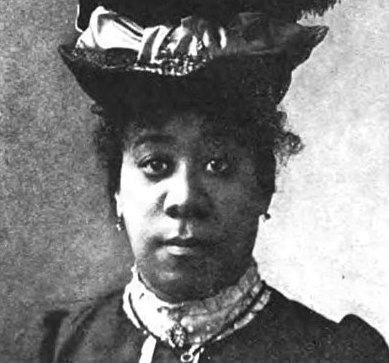
Like other African Americans of the eighteenth and early nineteenth centuries, Pauline Hopkins engaged with the history of the Nile Valley before the discipline of Egyptology was firmly established in the sphere of higher education in the US. Her serialized novel Of One Blood, published in 1902 and 1903, draws on a variety of sources, such as histories and travel diaries, to tell a fictionalized story set in her contemporary present of the Upper Nile and to address issues related to the ancient past of that region.
W. E. B. Du Bois, A New Voice in Egyptology’s History
November 2020
Article (11 pages)
ANKH: Journal of Egyptology and African Civilizations
ANKH Revue d’égyptologie et des civilisations africaines
http://www.ankhonline.com/revue.htm
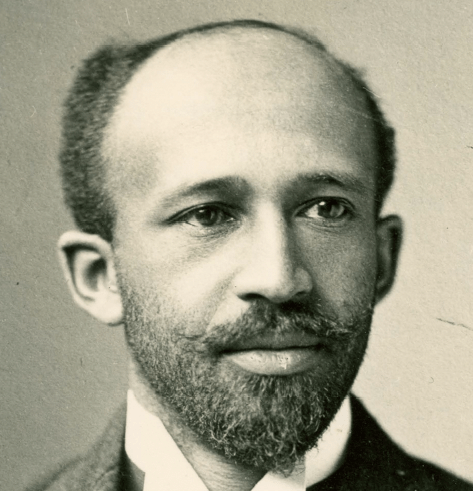
Narratives about intellectuals of African descent in the Western hemisphere who contributed to the discipline’s early history must become part of the stories we tell about the formation of Egyptology’s disciplinary history. My project revises that history by offering readers a new perspective on Egyptology focusing on people of African descent as actors on the historical stage.
This article is also available in French: W. E. B. Du Bois, une nouvelle voix dans l’historie d’égyptologie.
Egyptology and Africana Studies
August 2020
Blog post
Kemet Expert
https://kemetexpert.com/guest-post-by-dr-vanessa-davies-egyptology-and-africana-studies/
The divide between Egyptology and Africana studies perpetuates the separation of Egypt from the rest of Africa. It privileges the people in Egyptology programs as “qualified” to speak about Egypt and, from the perspective of Egyptology, confers the opposite on people in Africana studies.
Peace in Ancient Egypt
September 2018
Book (228 pages)
Harvard Egyptological Series
Brill
https://brill.com/display/title/35983
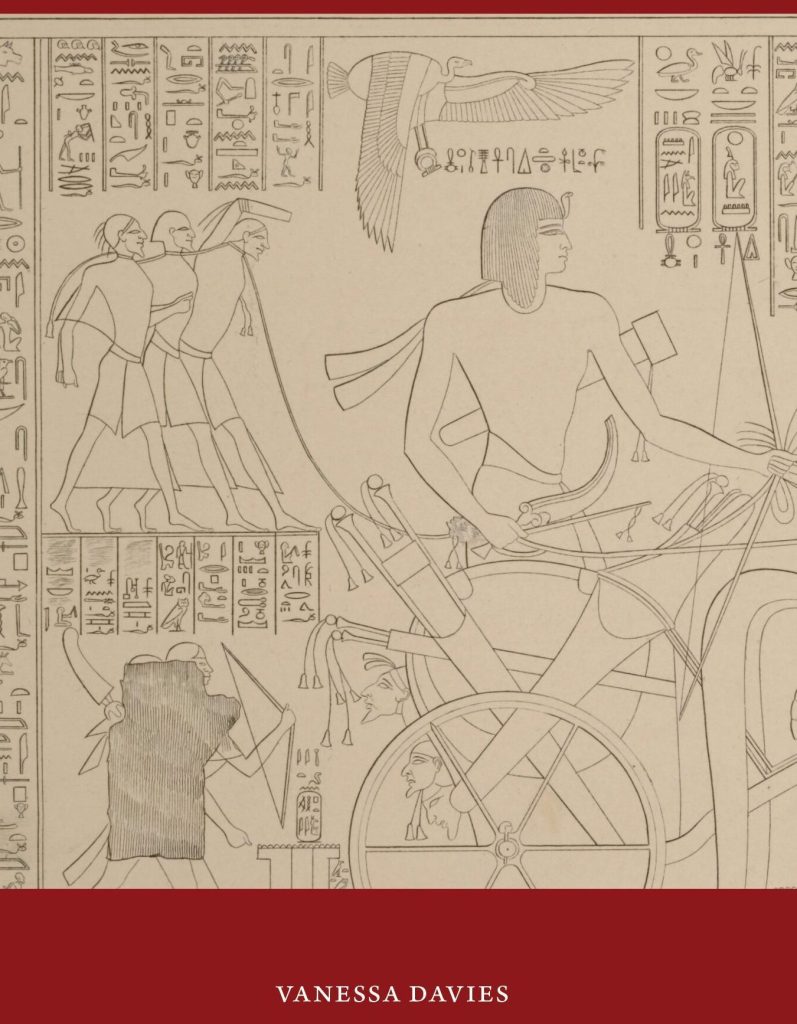
One of the world’s oldest treaties provides the backdrop for a new analysis of the Egyptian concept of hetep (“peace”). Hetep is the result of action that is just, true, and in accord with right order (maat). Central to the concept of hetep are the issues of rhetoric and community.
See a related blog post and graphic illustration.
The Oxford Handbook of Egyptian Epigraphy and Palaeography

March 2020
Book (712 pages)
Oxford University Press
https://global.oup.com/academic/product/the-oxford-handbook-of-egyptian-epigraphy-and-palaeography-9780190604653
The unique relationship between word and image in ancient Egypt is a defining feature of that ancient culture’s records. All hieroglyphic texts are composed of images, and large-scale figural imagery in temples and tombs is often accompanied by texts. Epigraphy and palaeography are two distinct, but closely related, ways of recording, analyzing, and interpreting texts and images. This Handbook stresses technical issues about recording text and art and interpretive questions about what we do with those records and why we do it.
The Phoebe A. Hearst Expedition to Naga ed-Deir, Cemeteries N 2000 and N 2500

November 2020
Book (544 pages)
Harvard Egyptological Series
Brill
https://brill.com/edcollbook-oa/title/54710
Finally published are the results of excavations directed by George A. Reisner and led by Arthur C. Mace from 1903 to 1905. In keeping with Reisner’s earlier publications of Naga ed-Deir, this volume presents artifacts in chapter-length studies devoted to a particular object type and includes a burial-by-burial description. The excavators’ original drawings, notes, and photographs are complemented by a contemporary analysis of the objects by experts in their subfields. Available for free via Open Access.
Liberal Arts and the High-School College Transition

2016
Article (4 pages)
NDIAS Quarterly
https://www.academia.edu/37140126/Liberal_Arts_and_the_High_School_College_Transition
Programs that bring college-level learning into high schools demonstrate that young students are capable of and interested in college-level work. We need to engage students in this type of learning at an earlier stage in their education. With two-year or four-year college now a goal for a greater and greater number of people, colleges and universities must find ways to extend a hand across that traditionally great divide.
Introduction to New Perspectives on Ancient Nubia

August 2024
Introduction
Gorgias Press
https://www.gorgiaspress.com/new-perspectives-on-ancient-nubia
The histories of Nile Valley cultures are embedded in a long rich didactic practice in African American communities. Mural artist John Biggers and musical artists Brand Nubian and Randy Weston are just a few examples of the rich and creative explorations of ancient African history and identity found in the US. Ancient Nile Valley cultures are indelibly associated with the power, the pride, and the joy that they communicate to those modern communities.
Coming soon: African Americans and the Study of Ancient Egypt,
co-authored with Mario H. Beatty
Anticipated in 2024
Article
Global Egyptology II
GHP Egyptology
The study and incorporation of ancient Egypt as part of the collective memory of African people in America has a long history that reaches back into at least the late 18th century.
 Vanessa Davies